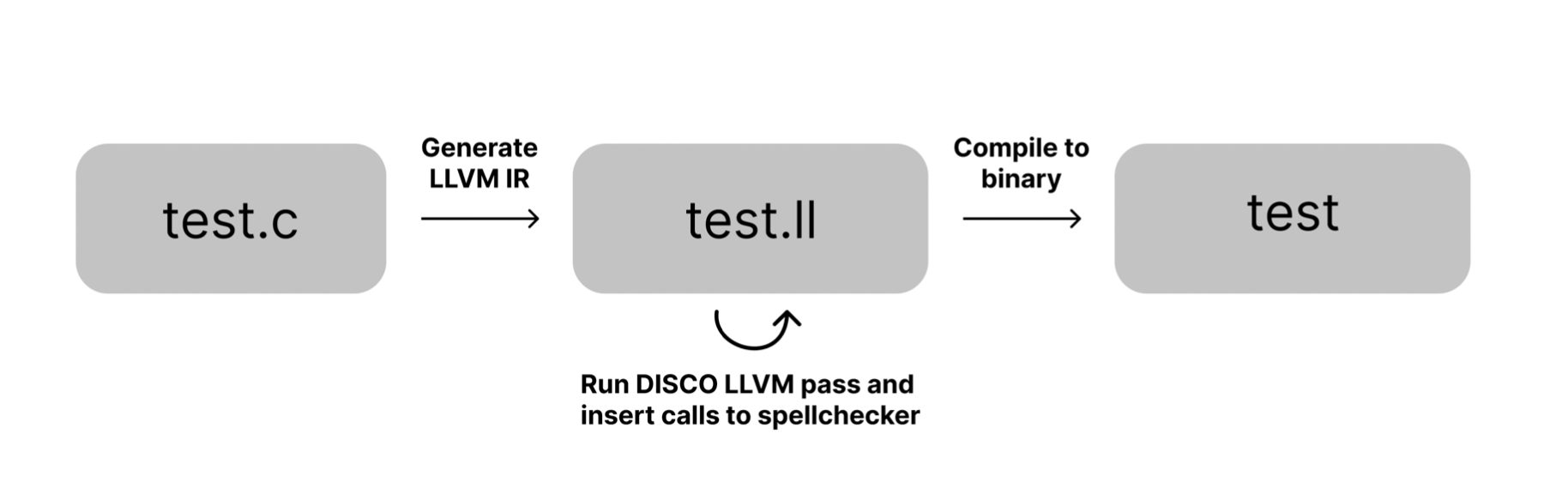
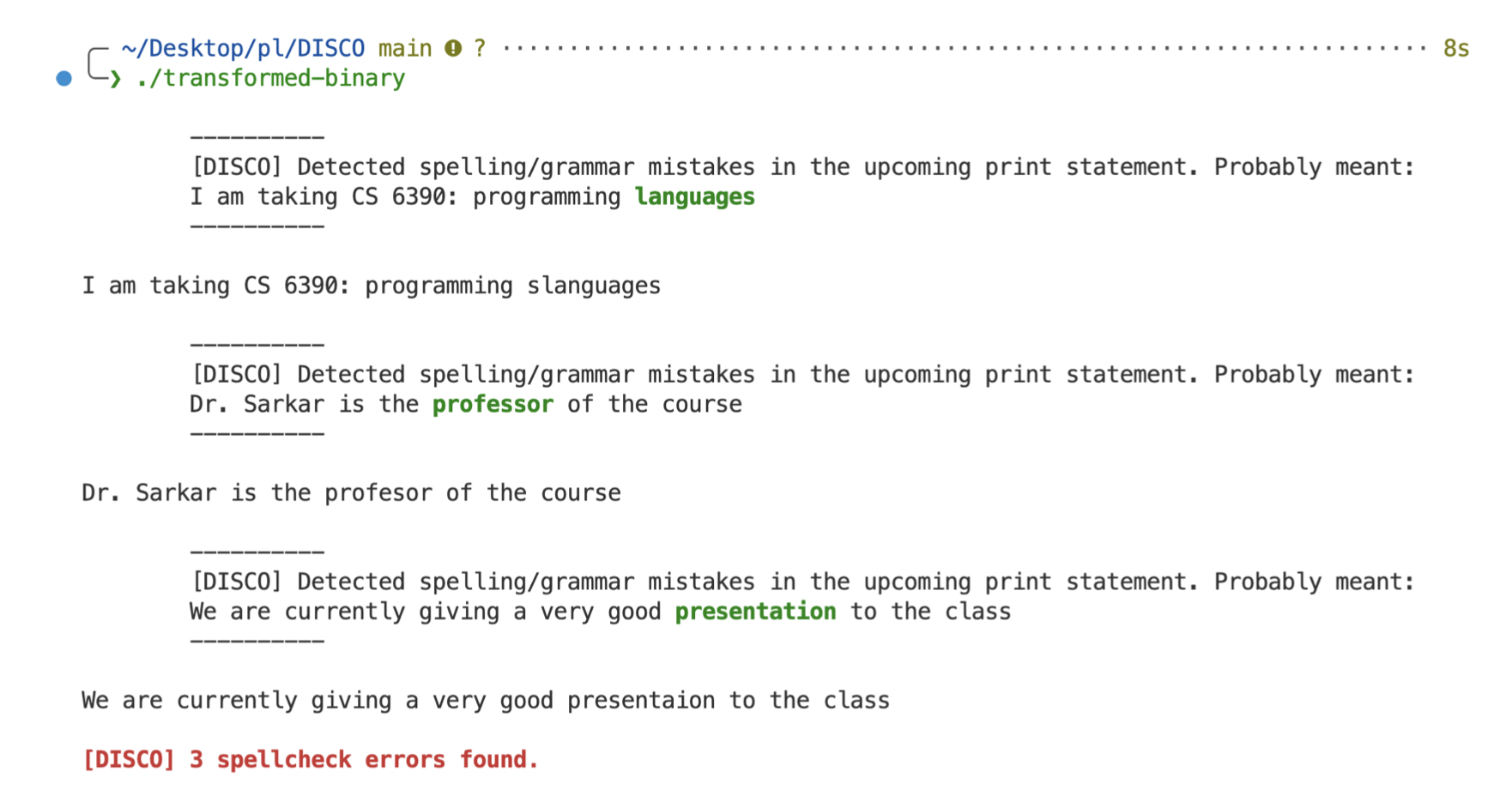
We propose DISCO, a dependently typed string and runtime LLVM compiler pass that detects string formatting issues, such as typos. Our approach can be extended to ensure form fields such as emails, phone numbers, passwords, dates, etc. are valid based on universal formatting conventions. Whenever a string deviates from the expected pattern, the runtime will identify this as a mismatch. This helps reduce usability issues arising from cultural variations in input and output validation. More details can be found in the paper.
#  build llvm
cd llvm-project
mkdir build && cd build
cmake \
    -DLLVM_TARGETS_TO_BUILD="X86" \
    -DCMAKE_CXX_STANDARD="17" \
    -DLLVM_INCLUDE_EXAMPLES=OFF \
    -DLLVM_INCLUDE_TESTS=OFF \
    -DLLVM_INCLUDE_BENCHMARKS=OFF \
    -DLLVM_APPEND_VC_REV=OFF \
    -DLLVM_OPTIMIZED_TABLEGEN=ON \
    -DCMAKE_BUILD_TYPE=Release \
    -DCMAKE_INSTALL_PREFIX=install \
    -DLLVM_ENABLE_PROJECTS='clang' \
    -G Ninja \
    ../llvm
cmake --build . --parallel
cmake --build . --target install

# build pass
mkdir build && cd build
cmake ../
make
for mac use:
cmake .. -Dzstd_INCLUDE_DIR="path" -Dzstd_LIBRARY="path"
Setup LLVM in environment:
source ./env.shCreate human-readable LLVM from a test file and run pass on it:
clang -emit-llvm -S test.c -o test.ll
./test.sh test.ll
Add Spellchecking to Binary:
clang++ test.ll-transformed.bc external/spellcheck.cpp external/dictionary.cpp -o transformed-binary
./transformed-binary
Run Binary:
./transformed-binary